Boxing vs Kickboxing: What’s the Difference?
griffins
|
09/26/2026
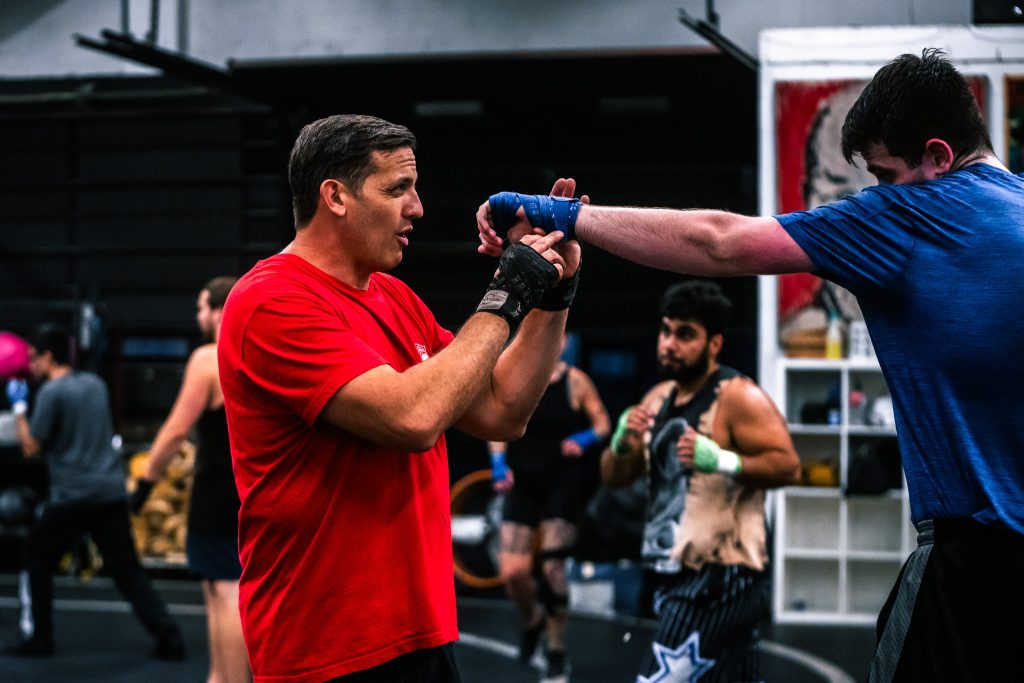
Boxing uses your hands only, four punches: jab, cross, hook, uppercut. Kickboxing keeps those same punches and adds kicks, and depending on the style, knees too. That one difference changes almost everything else: how you train, what gets stronger, and which one actually fits you better.
We coach boxing here, so there’s a natural bias built into this post. We’re not going to pretend kickboxing isn’t a great sport, because it is. We just want to give you an honest comparison so you can pick the one that actually fits, not the one we’re trying to sell you.
Boxing vs Kickboxing at a Glance
| Boxing | Kickboxing | |
|---|---|---|
| Strikes used | Punches only | Punches, kicks, sometimes knees |
| Learning curve | Fewer tools, each takes longer to sharpen | More tools to learn from day one |
| Mobility needed | Lower, easier on-ramp for stiff hips | Higher, kicks demand more hip mobility |
| Muscles emphasized | Shoulders, lats, core, obliques | All of that, plus hips, glutes, hamstrings |
| Heart rate/calorie burn | High, driven by punch volume and speed | Slightly higher on average, bigger full-body movements |
| Best for | Precision, hand speed, mastering one skillset | Full-body variety, more strikes to work with |
The Core Difference
Boxing gives you four punches: jab, cross, hook, uppercut. That’s it. No kicks, no knees, no elbows. Everything else in boxing exists to make those four punches faster, harder, and harder to see coming, your footwork, your hips, your head movement.
Kickboxing keeps the punches and adds kicks, and depending on the style, knees too. That means more targets to hit, more ways to get hit, and a stance built to defend both your upper and lower body at once.
Neither one is “harder.” They’re just solving different problems.
What Actually Changes When You Train Each One
Your stance. A boxer’s stance is built entirely around punching output and head defense. A kickboxer’s stance has to account for checking low kicks too, which changes how your weight sits and how quickly you can react to something coming from a completely different angle.
What gets strong. Boxing builds serious shoulder, lat, and core strength from repeated punching and rotation. Kickboxing adds real work for your hips, glutes, and hamstrings from the kicking motion, on top of everything boxing already builds.
The learning curve. Boxing has fewer tools to learn, four punches, but each one takes real time to get sharp. Kickboxing has more tools right from day one, which means more to think about early on, but also more variety to keep things interesting.
Mobility demands. Kickboxing asks more of your hips than boxing does. If you’re coming in with stiff hips or limited mobility, boxing has a gentler on-ramp. That’s not a knock on kickboxing, it’s just a real factor worth knowing before you pick.
Cardio. Both will get you breathing hard. Kicks are bigger, more full-body movements than punches, so a kickboxing class tends to push your heart rate a bit higher on average. Boxing’s cardio comes more from output speed and volume, throwing more punches, faster, for longer.
So Which One’s Actually Right for You
If you want to get sharp at one thing and get really good at it, hand speed, precision, footwork, boxing rewards that kind of focus. But if you’d rather use your whole body and like having more tools in the mix, kickboxing might click faster for you.
If you’re dealing with hip or lower body limitations right now, boxing is the easier place to start. If you’re already mobile and want the higher calorie burn that comes with full-body striking, kickboxing has an edge there.
Honestly, the biggest factor in results isn’t which one you pick. It’s whether you actually show up consistently. Both build real fitness, real confidence, and real skill if you take them seriously.
Why We Teach Boxing the Way We Do
At Griffins, Boxtech is built around that hand-speed-and-precision side of things, real boxing fundamentals taught through a structured belt system, not just a cardio class dressed up as boxing. If the idea of mastering one skillset instead of juggling ten different strikes sounds like your kind of training, that’s exactly what Boxtech is for.
Frequently Asked Questions
Is boxing or kickboxing better for beginners? Boxing is usually the easier starting point. Fewer tools to learn at once, and it’s gentler on the hips if you’re coming in with limited mobility. That said, plenty of beginners do just fine starting with kickboxing, it comes down to your body and what keeps you interested enough to actually show up.
Which burns more calories, boxing or kickboxing? Kickboxing tends to burn slightly more on average because kicks are bigger, more full-body movements than punches. Boxing’s calorie burn comes more from speed and punch volume. In practice, the difference usually comes down to how hard you’re training, not which sport you picked.
Is boxing or kickboxing better for self-defense? Both teach real, useful skills. Boxing sharpens hand speed, head movement, and close-range defense. Kickboxing adds distance-based tools like kicks, which can be useful if an attacker isn’t within arm’s reach. Neither replaces a dedicated self-defense course, but both build real, transferable skill.
Can you do both boxing and kickboxing? Yes, and a lot of people do. Boxing fundamentals, footwork, head movement, hand speed, carry over directly into kickboxing. Most kickboxing coaches will tell you a strong boxing base makes you better at kickboxing, not worse.
_ _ _
Interested in Boxing? Learn more about our 1-week trial, and join us for your first class!
There is something for everyone at Griffins: find the best option for you with our variety of Programs.
Brand-new to the world of boxing, and would feel more comfortable kicking off with a 1-on-1? We got you. Learn more about our private sessions.